Treatment overview
Dental Porcelain Shade Guide & Color Selection
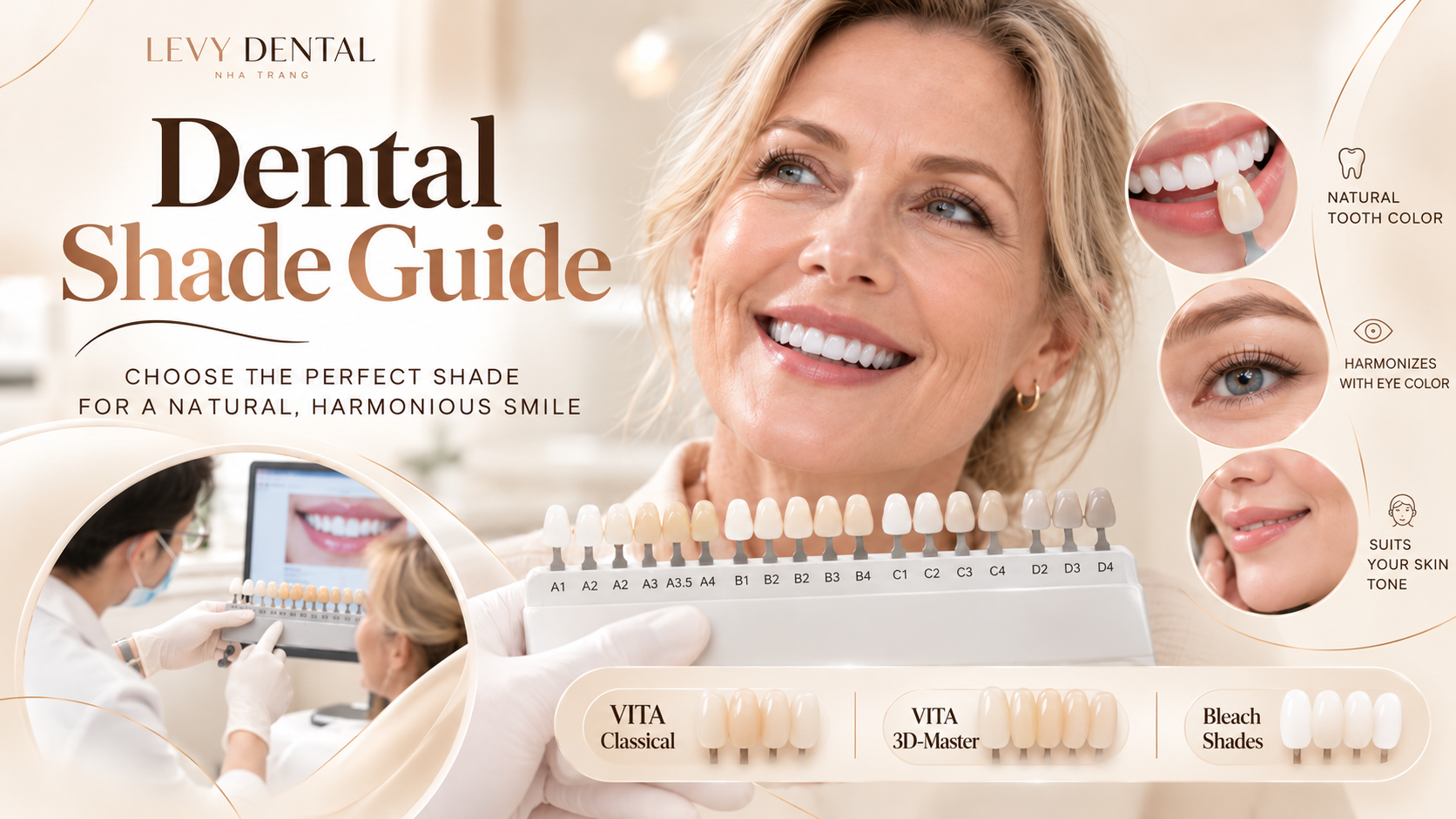
A dental porcelain shade guide is a standardized clinical reference system containing ceramic tabs categorized by hue, chroma, and value, allowing clinicians and patients to determine the exact shade matching natural dentition. Today, the Vita Classical and Vita 3D-Master systems are the internationally recognized benchmarks in restorative dentistry. At Levy Dental Clinic (Nha Trang, Vietnam), color matching extends beyond personal preference—it is calibrated against skin tone, eye sclera brightness, facial age, and the number of restored units, ensuring a vibrant, harmonious, and natural smile under all lighting conditions.
1. What Is a Dental Shade Guide and Why Is Accurate Matching Crucial?
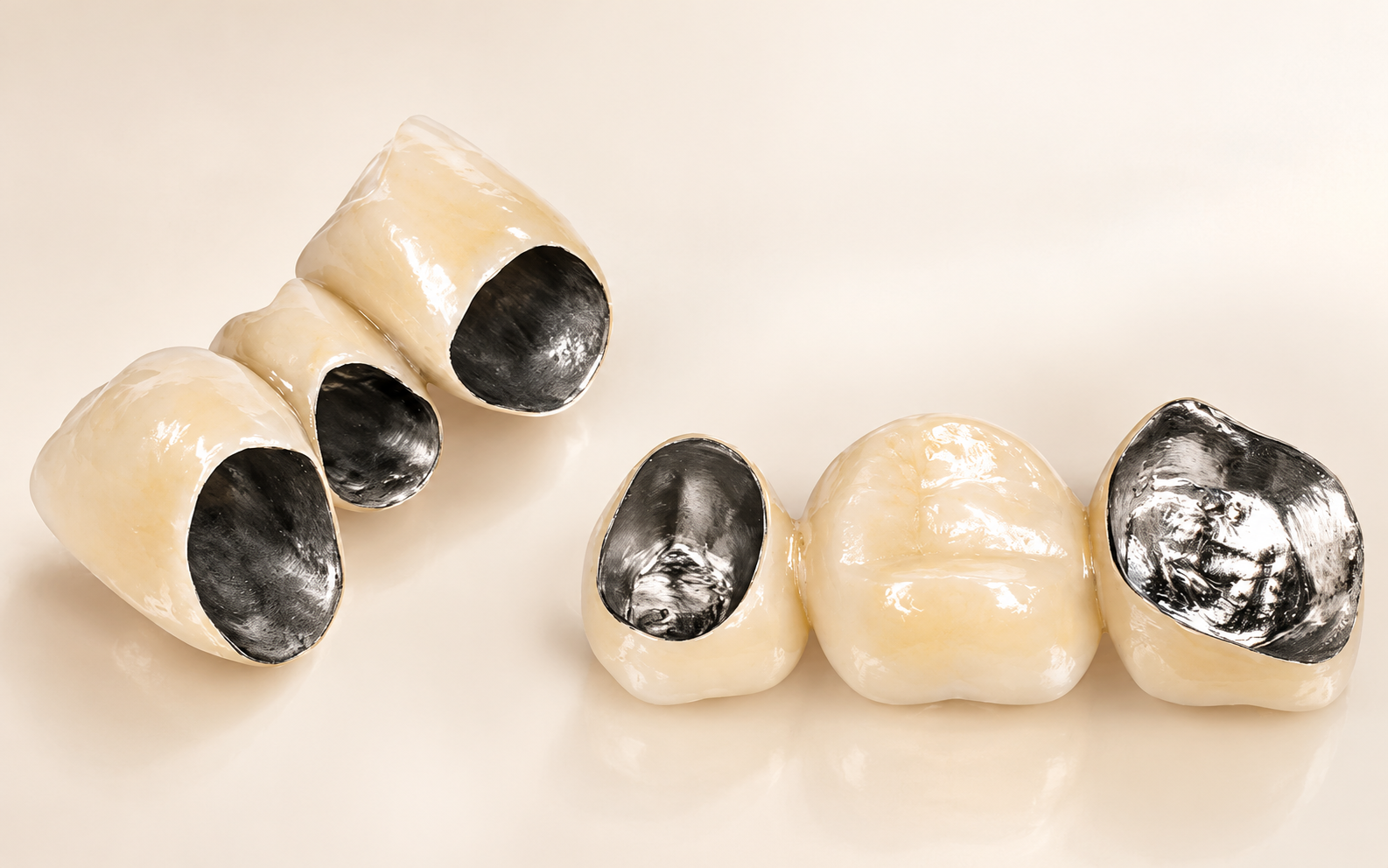
A dental shade guide is an organized collection of reference tabs displaying graduated tooth colors. It serves as a visual and scientific communication bridge among the clinician, the patient, and the master dental ceramist.
Selecting an incorrect tooth shade results in noticeable aesthetic discrepancies:
Excessively chalky, opaque teeth that lack biological translucency and look visibly artificial.
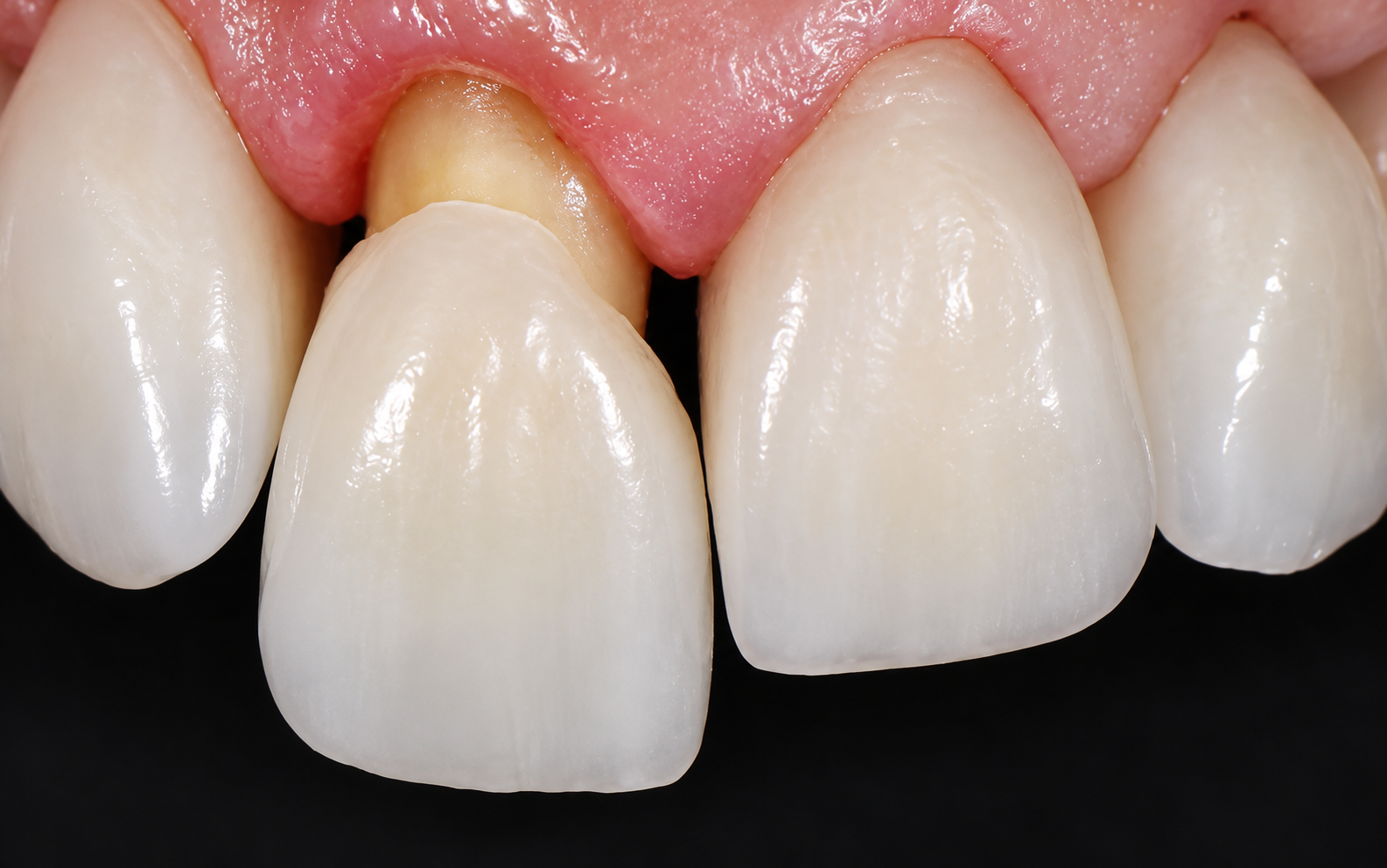
Obvious shade contrasts between single crowns and adjacent natural teeth, drawing unwanted attention to the restored site.
Unbalanced contrast against facial undertones and lip contours.
Precise shade matching determines more than 50% of the cosmetic success in dental crown and porcelain veneer procedures.
2. Standard International Dental Shade Guide Systems
Modern aesthetic dentistry relies on globally verified shade matching systems:
2.1 The Vita Classical Shade Guide (The Timeless Standard)
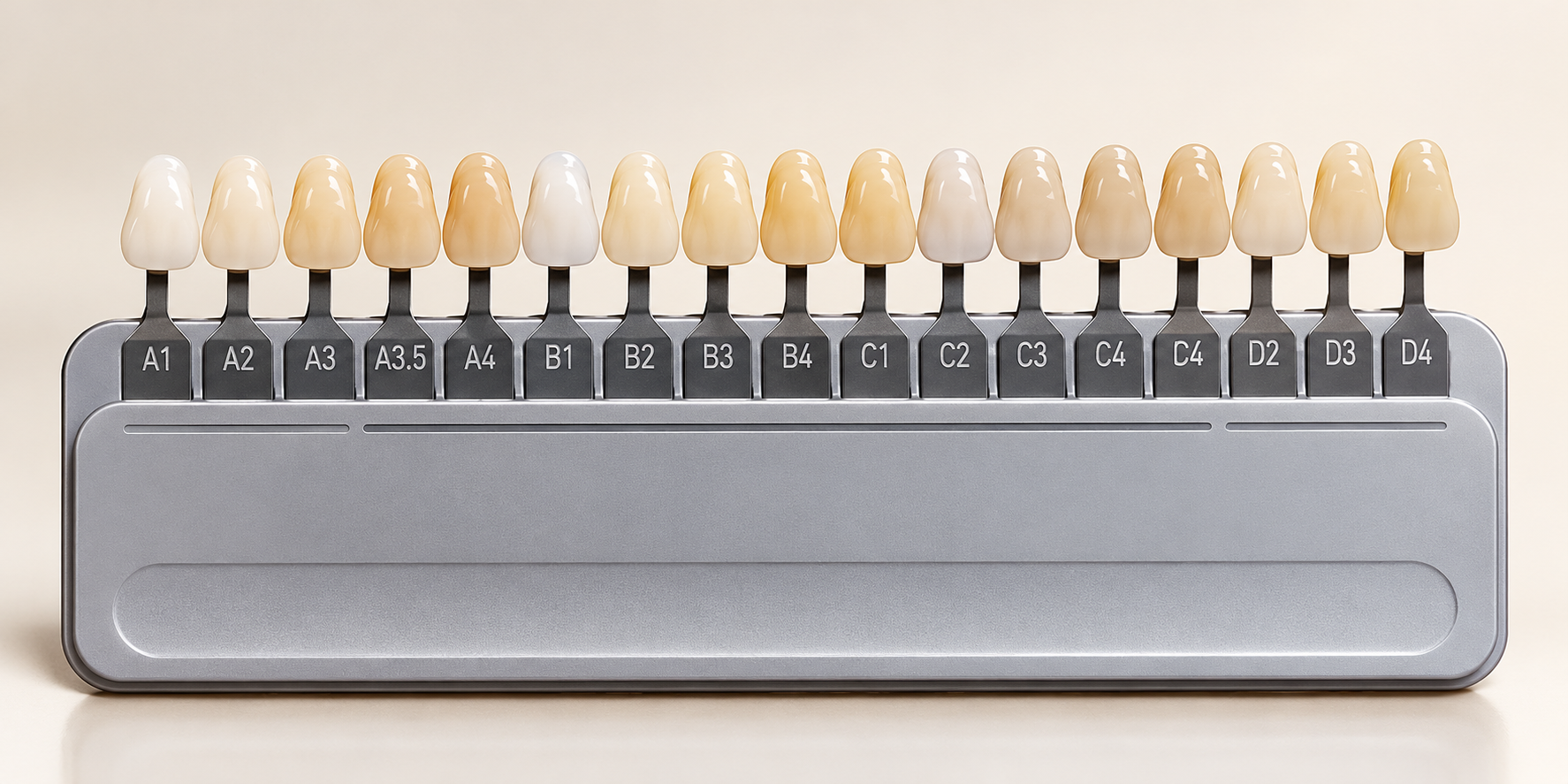
Vita Classical remains widely utilized, categorizing natural tooth shades into 4 primary hue groups across 16 designations:
Group A (Reddish-brownish): Comprising A1, A2, A3, A3.5, and A4. Group A represents approximately 70–80% of natural Asian and Caucasian tooth shades. A1 and A2 are the most frequently selected natural tooth shades.
Group B (Reddish-yellowish): Comprising B1, B2, B3, and B4. The B1 shade exhibits high brightness, preferred by patients desiring a noticeably bright smile.
Group C (Greyish shades): Comprising C1, C2, C3, and C4. Suitable for patients with natural greyish undertones or slightly aged enamel.
Group D (Reddish-grey): Comprising D2, D3, and D4. A less common hue family, primarily used for targeted individual crown matches.
2.2 The Vita 3D-Master System (Systematic Color Precision)
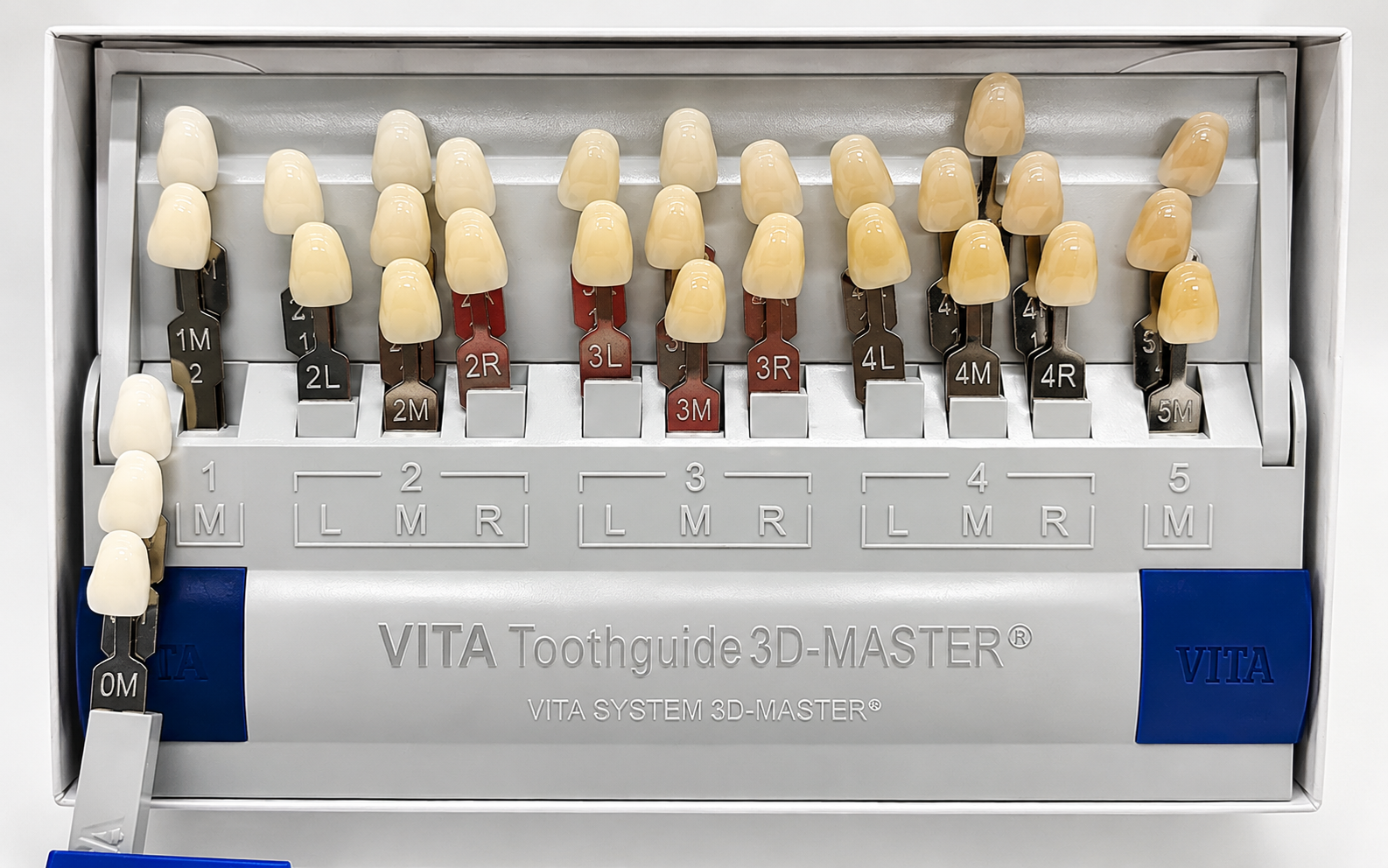
The Vita 3D-Master system provides advanced color accuracy based on 3 scientific optical parameters:
Value (Lightness): Categorized into 5 distinct brightness levels from 1 (darkest) to 5 (brightest).
Chroma (Color Saturation): The intensity or depth of the hue.
Hue (Color Tone): Categorized into L (yellowish), M (medium neutral), and R (reddish).
This 3D architecture allows Levy Dental clinicians to capture multi-layered optical characteristics: a richer cervical margin, a balanced body, and translucent incisal edges that mimic natural tooth anatomy.
2.3 Bleach Shade Systems
Formulated for high-aesthetic Hollywood smile transformations. Bleached shades (such as OM1, OM2, and OM3) exhibit brightness levels exceeding standard A1 or B1 options.
3. Expert Guidelines for Selecting a Natural Porcelain Tooth Shade
To balance aesthetic brightness with lifelike natural harmony, cosmetic dentists at Levy Dental follow systematic evaluation criteria:
3.1 Matching According to Skin Tone
Fair / Cool Complexion: Highly versatile; comfortably accommodates bright shades like OM2, B1, or A1 without creating stark contrasts.
Medium / Olive Complexion (Common across Southeast Asia): Neutral, warm shades such as A2 or A3 offer optimal balance, preventing an overly artificial contrast.
Tan / Deep Complexion: Warm ivory undertones (such as A3 or B2) provide an authentic, healthy smile profile.
3.2 Referencing the White of the Eyes (Sclera)
A core benchmark in cosmetic dentistry: The shade of your dental restorations should not appear significantly brighter than the sclera (white part) of your eyes. When teeth exceed scleral brightness, observers subconsciously perceive the smile as artificial.
3.3 Number of Restorations Undertaken
Single or Few Units (1 to 4 Teeth): Strict shade parity with adjacent natural teeth is imperative to ensure seamless optical blending.
Full-Arch Restorations (16 to 20 Teeth): Patients can safely elevate their baseline shade by 1 to 2 values (e.g., from A3 to A1 or B1) to achieve complete smile rejuvenation without mismatch risks.
3.4 Age and Gender Considerations
Younger Patients: Feature pronounced incisal translucency and higher natural value. Shades A1, B1, or soft Bleach shades complement youthful dynamic facial expressions.
Mature Patients: Natural enamel gradually accumulates deeper internal pigments. Gentle ivory tones (A2, A3) provide a sophisticated, realistic aesthetic suitable for mature features.
4. High-Performance Ceramic Systems and Optical Features
Aesthetic performance is tied directly to the structural properties of monolithic ceramics:
Ceramic Restoration | Origin | Optical & Aesthetic Features | Approximate Cost |
Zirconia Crown | Germany / Korea | Exceptional flexural strength, moderate opacity; effectively masks dark prepped tooth stumps. | 3,500,000 VND / tooth |
Cercon HT Crown | Germany (Dentsply Sirona) | Superior optical translucency, excellent light dispersion under direct illumination, comprehensive shade selection. | 5,000,000 VND / tooth |
Emax Porcelain Veneer | Switzerland (Ivoclar Vivadent) | Lifelike enamel translucency, minimal preparation required, preserves natural tooth tissue. | 6,000,000 – 8,000,000 VND / tooth |
5. Clinical Shade-Matching Protocol at Levy Dental Nha Trang
At Levy Dental Clinic, shade selection follows a multi-phase verification workflow:
Step 1: Surface Debridement and Polishing
Plaque, pellicle, and superficial extrinsic stains are thoroughly cleared to expose true natural enamel color.
Step 2: Assessment Under Standard 5500K Illumination
Color matching is conducted under balanced 5500 Kelvin daylight-spectrum illumination, avoiding yellow tungsten room lights or high-intensity lamps that cause optical deception.
Step 3: Cross-Polarized Digital Photography
Clinical intraoral cameras equipped with cross-polarizing filters photograph the reference shade tabs beside target teeth, transmitting glare-free chromatic data directly to the CAD/CAM lab.
Step 4: Clinical Try-In Evaluation
Prior to final bonding, restorations are evaluated intraorally with try-in pastes under natural daylight, allowing patients to inspect color, fit, and smile symmetry.
6. Frequently Asked Questions (FAQ)
Do porcelain crowns stain or discolor over time?
High-grade monolithic ceramics (Zirconia, Cercon, Emax) are sintered above 1350°C and coated with high-density nano-glazes, making them impervious to dietary staining from coffee, tea, red wine, or tobacco.
Should I choose a natural tooth shade or Hollywood white?
For patients in media, modeling, or performing arts, vibrant bleach shades (B1 or Bleach OM) create strong visual impact. For patients seeking refined, understated elegance in professional and everyday environments, balanced natural shades (A1, A2) provide timeless discretion.
Experience Digital Shade Matching at Levy Dental Nha Trang
Porcelain shade selection balances clinical anatomical science with cosmetic design. Visit Levy Dental Clinic to discover your optimal tooth shade