Dental Implants: A Practical Guide Before You Decide
Understand implant components, assessment, common stages, risks, maintenance and the questions to ask before treatment.
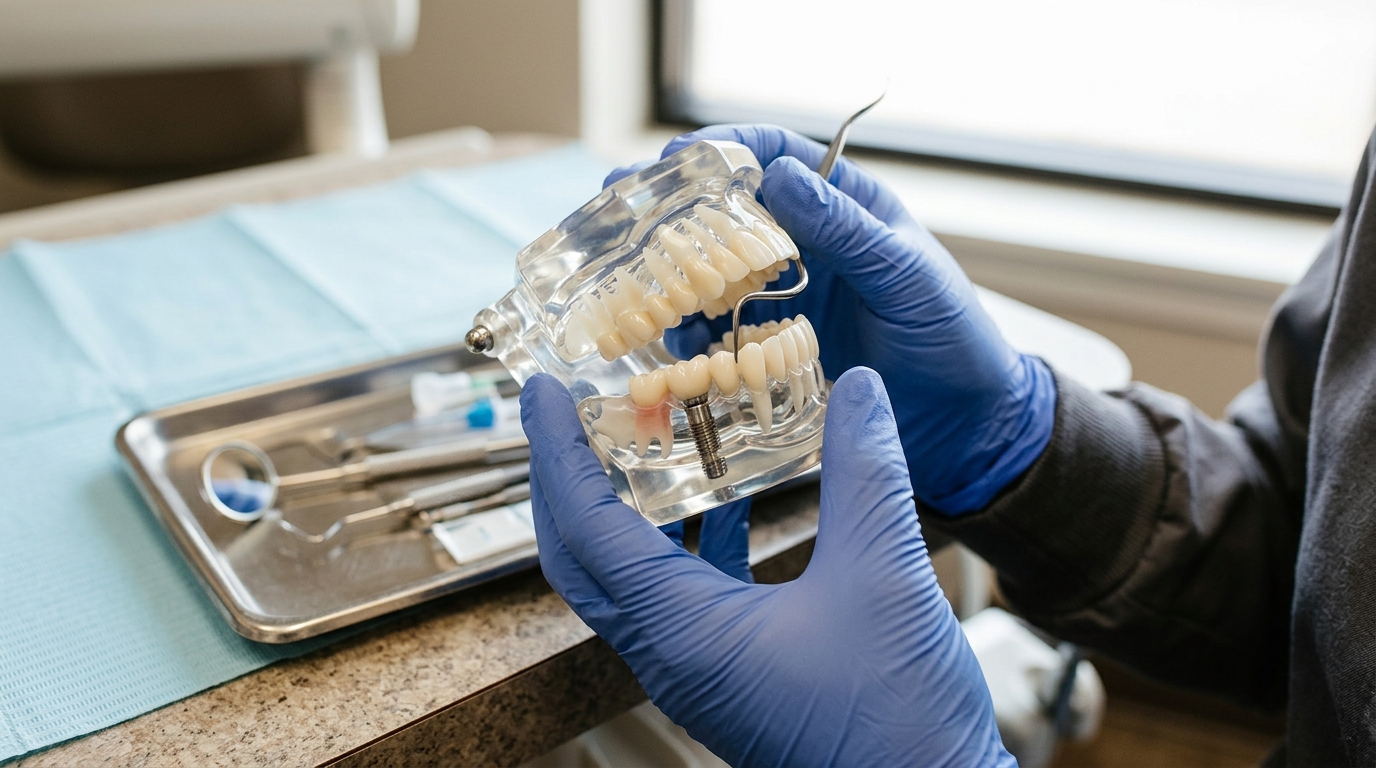
A dental implant is one option for replacing missing teeth. An implant is placed in the jawbone to support a crown, bridge or denture. Because treatment involves surgery, healing and a long-term restoration, suitability cannot be decided from age, price or a photograph alone.
This guide helps you prepare for a clinical conversation. It is not a diagnosis or a personal treatment recommendation.
1. What makes up an implant restoration?
The system commonly includes an implant in the bone, a connecting component and the visible restoration. A single missing tooth may be restored with an implant-supported crown. Several implants may support a bridge or selected removable restoration. The number of implants does not automatically equal the number of missing teeth; position and design depend on bone, bite and the intended prosthesis.
2. Why assessment comes before a quotation
Treatment planning considers why the tooth was lost, gum health, neighbouring teeth, bite, grinding habits, daily cleaning and medical history. Appropriate imaging helps the clinician assess bone and nearby anatomy. The required records vary by case, so a recent image sent online may support a preliminary discussion but not a final plan.
- Medical conditions, medicines, allergies and previous surgery.
- Smoking or nicotine use because healing may be affected.
- Untreated decay, gum inflammation or periodontal disease.
- Bone volume, soft tissue and relevant anatomical structures.
- Restorative space, bite and chewing forces.
- Ability to clean the restoration and attend long-term reviews.
3. Common treatment stages
Assessment and disease control
Active oral disease or infection should be identified and managed appropriately. If a tooth must be removed, the timing of implant placement depends on the socket, bone, soft tissue and overall risk.
Implant placement
The implant is placed according to the agreed surgical plan. Afterwards, the patient receives instructions about hygiene, diet, medicines and warning signs. A temporary restoration may be possible in selected cases, but “same-day teeth” does not mean all biological healing is complete in one day.
Healing and restoration
Bone and soft tissue need time to heal. When the site is ready, records are taken for the crown, bridge or denture. Fit, contacts, bite, cleanability and appearance should be checked before the restoration is finalised.
4. Potential benefits and limitations
Implants can support chewing and, in selected cases, replace a tooth without preparing neighbouring teeth for a conventional bridge. They are still medical devices, and complications can occur early or later. Published patient guidance describes risks such as infection, delayed healing, damage to nearby structures, altered sensation, bite problems, component loosening, bone loss and failure that may require another procedure.
Risk is not identical for everyone. Smoking, poorly controlled blood glucose, unstable periodontal disease, difficult hygiene, excessive bite forces and missed maintenance can complicate care.
5. Long-term care
- Follow cleaning and medication instructions exactly.
- Do not start antibiotics or stop prescribed medicines without advice.
- Report increasing pain, swelling, bleeding, fever or mobility.
- Brush and clean around the restoration with the recommended tools.
- Attend a risk-based review schedule instead of waiting for pain.
- Keep the implant system, restoration and treatment records.
6. Questions to ask before consent
- What is the diagnosis and what alternatives are reasonable?
- Why is this number and position of implants proposed?
- Do the gums, remaining teeth or bone need treatment first?
- Who will place the implant and who will make the restoration?
- Which stages, temporary work, materials and reviews are included in the estimate?
- How are unexpected changes and additional costs approved?
- What follow-up will I need if I travel or move away?
7. When to seek an earlier review
Contact the treating clinic promptly if swelling, pain, bleeding, fever, reduced mouth opening, persistent numbness or mobility is worsening. Difficulty breathing or swallowing requires urgent medical help.
Key takeaway
A sound implant decision compares the whole pathway—not only the price of one implant. Consider the diagnosis, alternatives, treating team, restoration, risks, maintenance and the plan for support after treatment.