
Teeth Whitening: Results, Sensitivity and Limits
Learn how whitening works, which discoloration may respond, why crowns and veneers stay the same colour, and how sensitivity is managed.
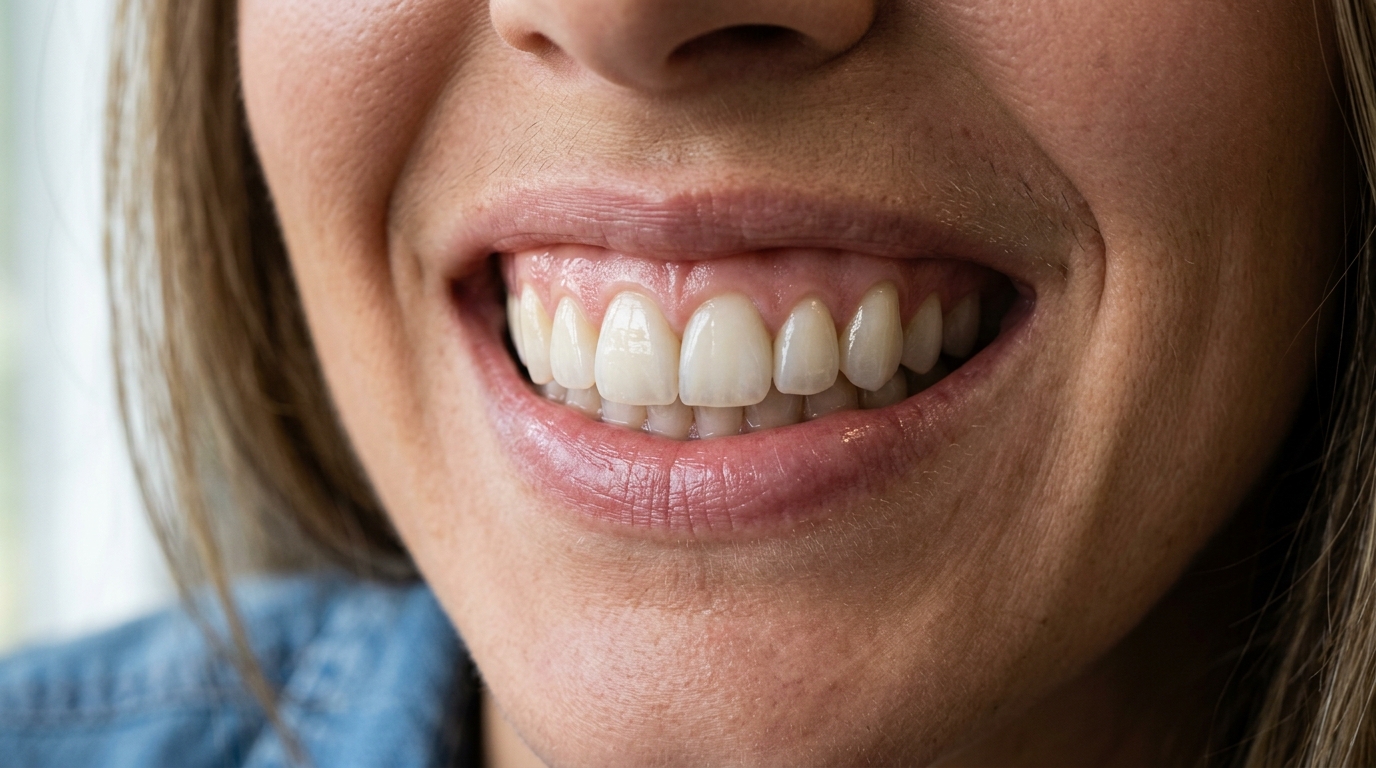
Teeth whitening uses bleaching agents such as hydrogen peroxide or carbamide peroxide to lighten natural tooth structure. It has clear limits: not every type of discoloration responds, and crowns, veneers and fillings do not whiten like natural teeth.
Why do teeth change colour?
Colour can change because of surface stain from tea, coffee or tobacco, ageing, enamel and dentine characteristics, medicines, trauma, decay or pulp changes. Because the causes differ, the correct response differs. One dark tooth should be assessed instead of automatically bleaching every tooth.
How whitening works
Bleaching agents break stains into smaller components, making colour appear less concentrated. Whitening can be provided in the clinic or with a supervised home tray. Concentration, contact time and frequency matter; using more product or leaving it on longer does not guarantee a better outcome.
Why examination matters
- Identify decay, cracks or leaking restorations that may cause sensitivity.
- Assess gum inflammation, recession and exposed roots.
- Determine whether the type of discoloration is likely to respond.
- Record visible crowns, bridges, veneers and fillings.
- Discuss the desired shade and realistic limits.
- Plan sensitivity management where needed.
Will crowns, veneers or fillings change colour?
Not in the same way as natural teeth. Existing restorations may become more noticeable because they keep their original shade. If they are visible, discuss the sequence: whiten first, allow the colour to settle and only then consider replacing a restoration if it is genuinely needed.
Sensitivity after whitening
Temporary sensitivity can occur when peroxide travels through enamel and dentine and irritates the nerve. The protocol can be adjusted by changing concentration, contact time or rest periods. Severe, localised or persistent pain should be assessed because it may not be a normal whitening response.
What to avoid
- Unlabelled chemicals or products used beyond their instructions.
- Repeated bleaching to chase an unnaturally light shade.
- Allowing product to sit on gums or other soft tissue.
- Ignoring decay, cracks or pain before treatment.
- Assuming everyone can reach the same colour.
Maintaining the result
Twice-daily brushing with fluoride toothpaste, interdental cleaning and appropriate dental reviews support oral health. Tobacco and strongly staining drinks can affect colour maintenance. There is no universal schedule for repeating whitening; decisions should consider tooth health, gums and sensitivity.
Key takeaway
Responsible whitening begins by identifying the cause of discoloration and setting realistic expectations. The goal is a harmonious improvement within the safe limits of the teeth and gums—not the brightest possible shade at any cost.